Metabolomics Center

Overview
The Metabolomics Center has an emphasis on the detection and quantification of a set polar metabolites of central carbon and branch pathway metabolism. This approach can be run in an unlabeled fashion and allows for the utilization of isotopically labeled tracers, such as 13C-glucose, 13C15N-glutamine, or 13C-palmitate, which can provide insight into relative pathway utilizations.
When feasible, we accommodate the LC-MS analysis of other types of metabolites by incorporating additional standards or different chromatography. Such collaborative projects push our LC-MS methods forward.
Leadership





Instruments
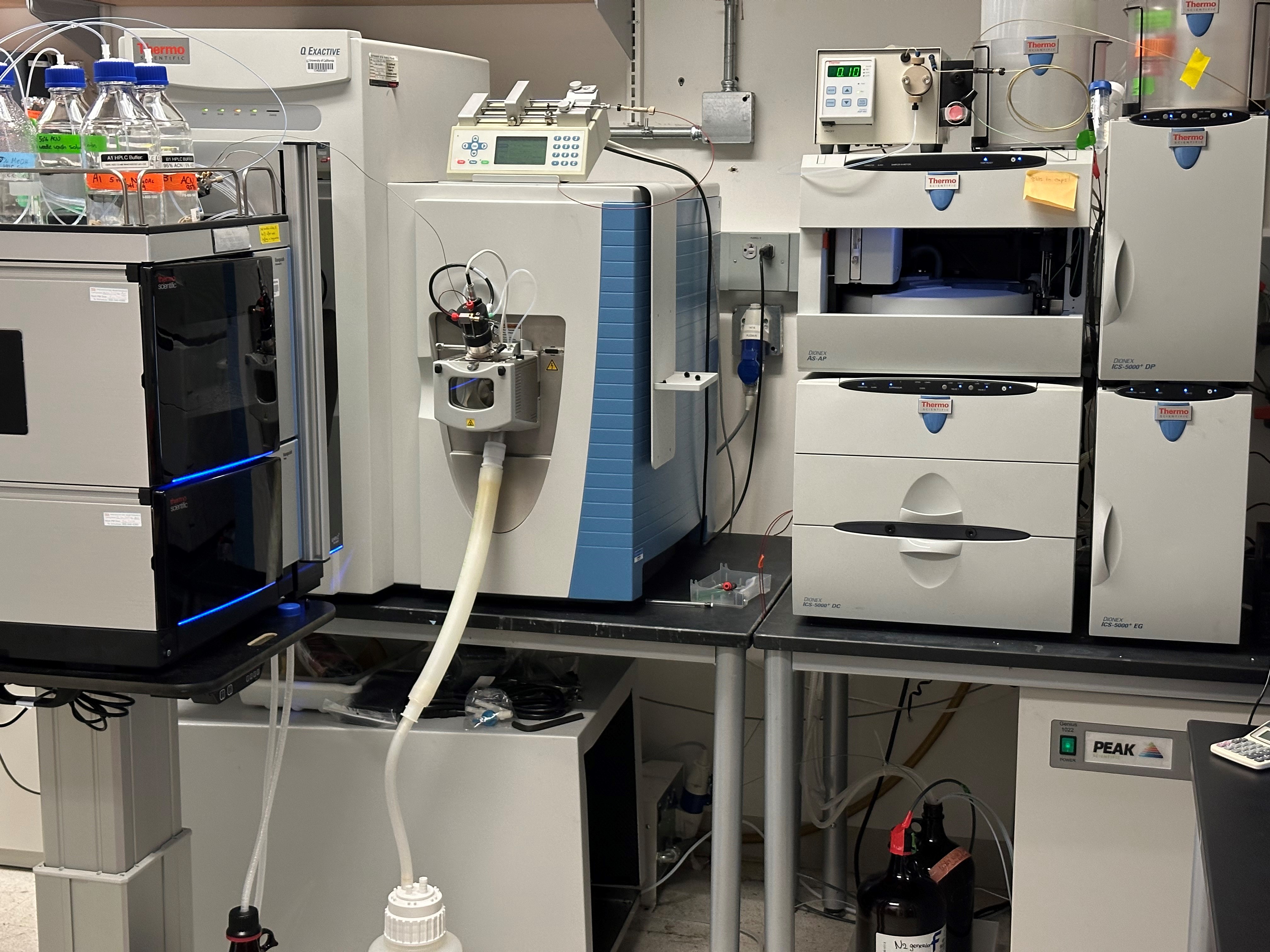
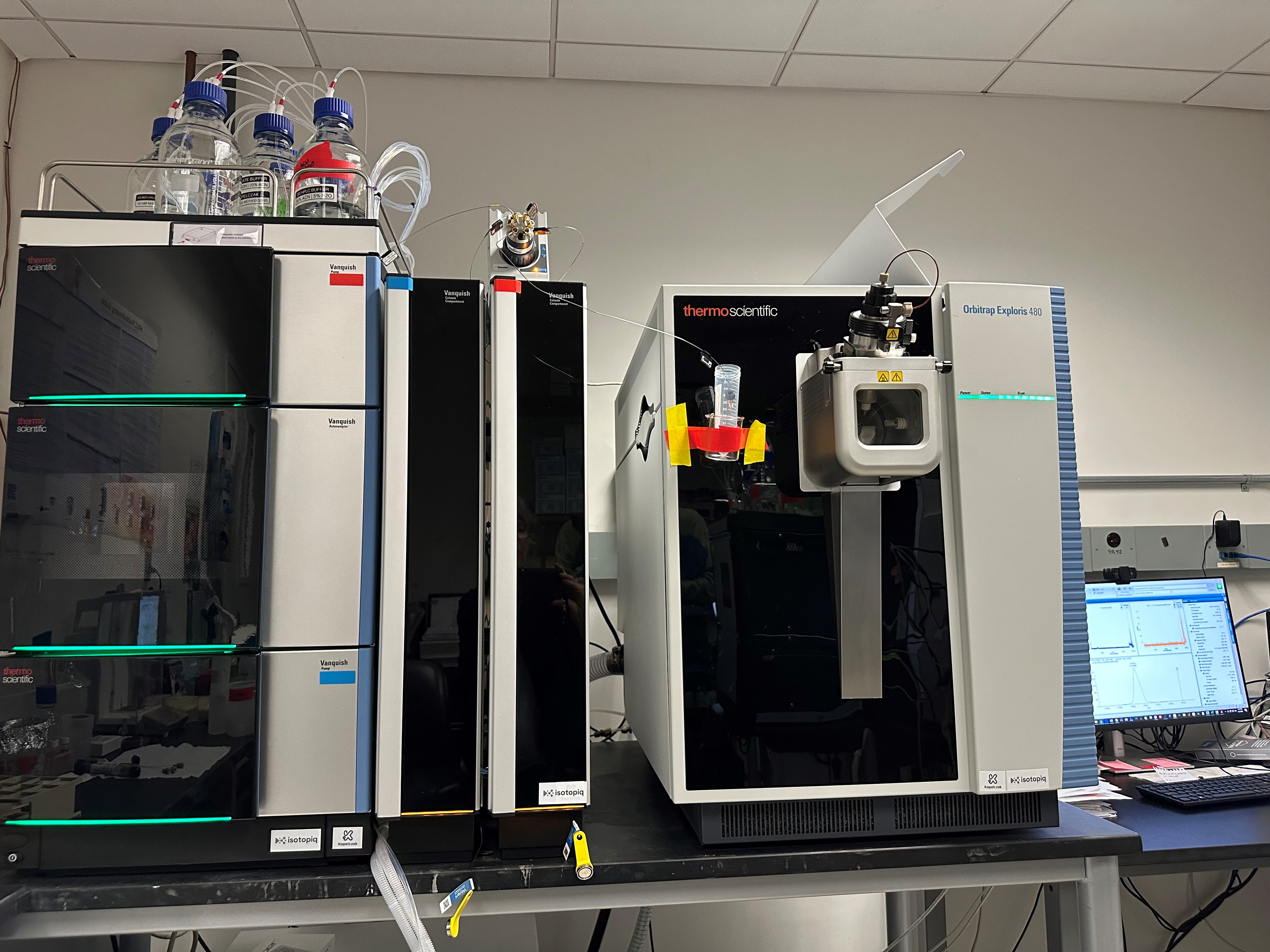
Data is collected using two state-of-the-art high mass accuracy Thermo Orbitrap mass spectrometers: an Exploris 480 and a Q-Exactive that are coupled to a Vanquish Duo and a Vanquish Flex Binary UHPLC chromatography system, respectively. In addition, we have a Thermo Ion Chromatography System (ICS) 5000 for increased sensitivity and selectivity of certain acids, phospho-carbohydrates, and nucleotides. The LC-MS systems allow us to detect metabolites in full-scan mode (using a wide m/z mass range) or in SIM mode (smaller m/z windows for measurement of target metabolites with enhanced sensitivity). The instruments can be run up to 480K and 140K resolution, respectively. The increased resolution allows us to distinguish 13C-labeled metabolites from 15N-labeled or 18O-labeled metabolites in the same sample. In addition, the instruments can perform fragmentation of selected ions, which assists in the identification and verification of metabolites.
Services
Metabolomics Center Workflow
- Sample Preparation
- LC-MS Analysis
- Feature Extraction and Quantification using Maven, TraceFinder 4.1 (Thermo), or Compound Discoverer 3.4 (Thermo)
- Quality Control
- Data Report
Data analysis
Services include data analysis such as ANOVA statistical analysis, heatmapping, principal component analysis, and isotopologue distribution analysis.
Sample types we can process
Our projects are very diverse, including metabolite level measurements, determining changes in cell culture medium (metabolic footprinting) and interrogating metabolic flux differences using isotope tracers. The types of samples we process range from cultured cells, conditioned medium, tissues, blood, isolated primary cells, urine, and stool.