Protein Expression Technology Core
Institute for Genomics and Proteomics (IGP)
Overview
The center was founded in 1994 to facilitate the expression and purification of proteins for structure/function studies. The center provides support in all aspects of protein expression from cloning through expression optimization and protein purification. The center is a UCLA-DOE Institute for Genomics and Proteomics facility but is open to all researchers.
The evaluation of many expression constructs can be a crucial step in obtaining a protein sample suitable for further characterization. Recent advances in cloning and protein expression based on technologies developed by structural genomics consortia have resulted in the ability to evaluate tens or hundreds of expression constructs rapidly and economically. We have adapted these techniques to allow for a medium throughput approach suitable for the hypothesis-driven projects of academic research groups. Our resources allow rapid analysis of conditions that yield well-behaved soluble protein for downstream biochemical and biophysical studies.
Leadership
Services
Cloning and Construct Design
The PETC clones genes directly from an organism, library, or synthetic DNA using any common cloning techniques although our preferred method is based on Gibson assembly. We maintain a supply of approximately 65 bacterial genomes to use as PCR templates however most current projects use third party gene synthesis vendors to supply gene fragments or sequence-verified expression clones. A variety of bioinformatics tools (PSIPRED, DISOPRED, Phyre, AlphaFold, SignalP, etc) are used to guide the design of expression constructs.
Expression Systems
Bacterial expression systems used by the PETC include a variety of inducible protein expression vectors (pET and pBAD), fusion systems (SUMO/His6/MBP/Thioredoxin) for increased solubility and affinity chromatography, and vectors to co-express chaperones or rare tRNAs to promote folding and increase recombinant protein yields. Eukaryotic expression systems, yeast (S. cerevisiae and P. pastoris) or insect cells (Sf9) use constitutive or inducible promoters and allow for secreted or cytoplasmic expression of target proteins.
Protein Expression Screening
Protein expression screening uses bacterial (E. coli) and yeast (P. pastoris) expression hosts. A ShelLab SI6R-HS shaking incubator allows growth of up to 1152 cultures in 96-well format to high culture densities. The high cell densities allow microgram amounts of recombinant protein to be produced in the small culture volumes used in 96-well plates. Cell lysis is performed in 96-well format and SDS-PAGE analysis is used to evaluate target protein expression. Batch purification of protein from the soluble fraction is used to assess the ability of the target protein to bind affinity purification resins. Cell growth in 96-well format allows parallel investigation of parameters critical for obtaining high yields of recombinant target proteins. Parameters explored include: expression strains, media, growth and/or induction temperature, coexpression with accessory plasmids (pLysS, pRIL, pRARE, etc), and lysis buffers.
Large Scale Fermentation and Cell Lysis
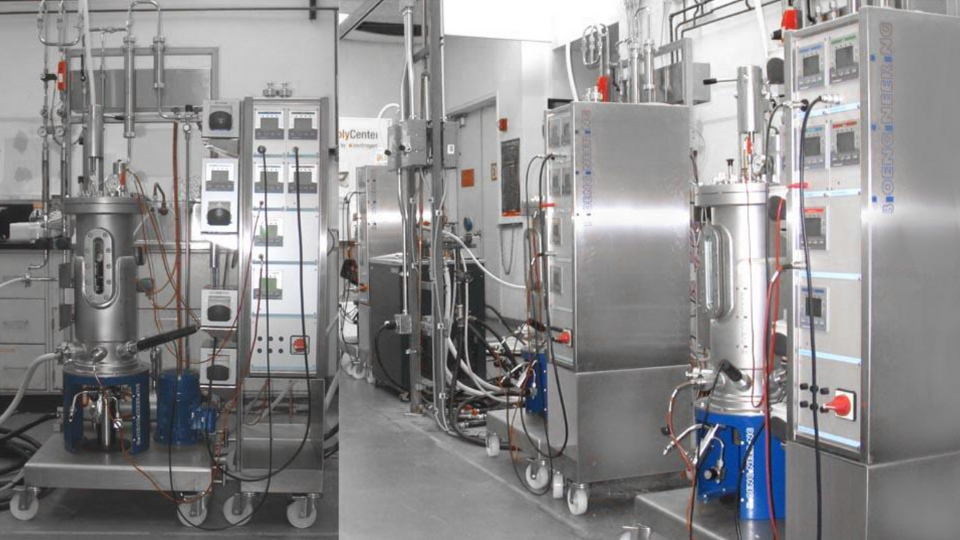
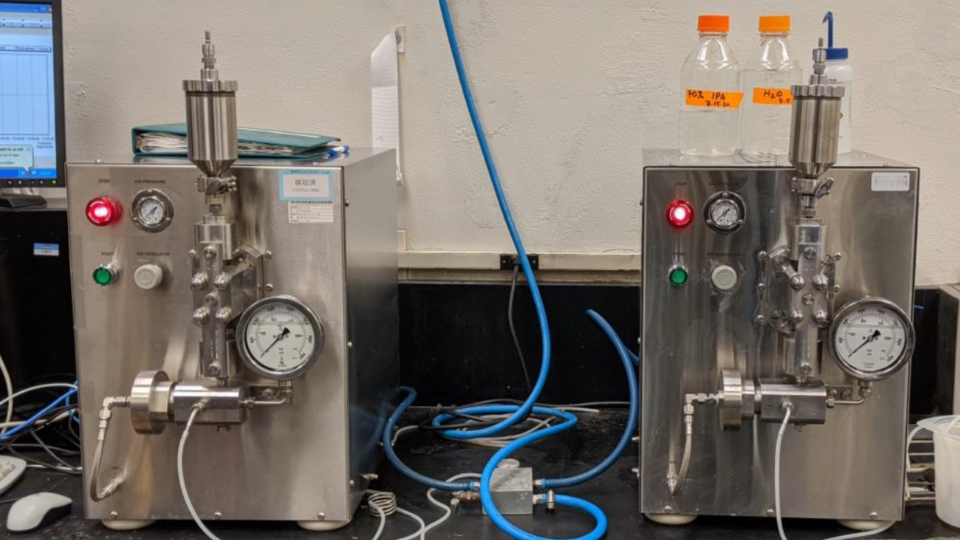
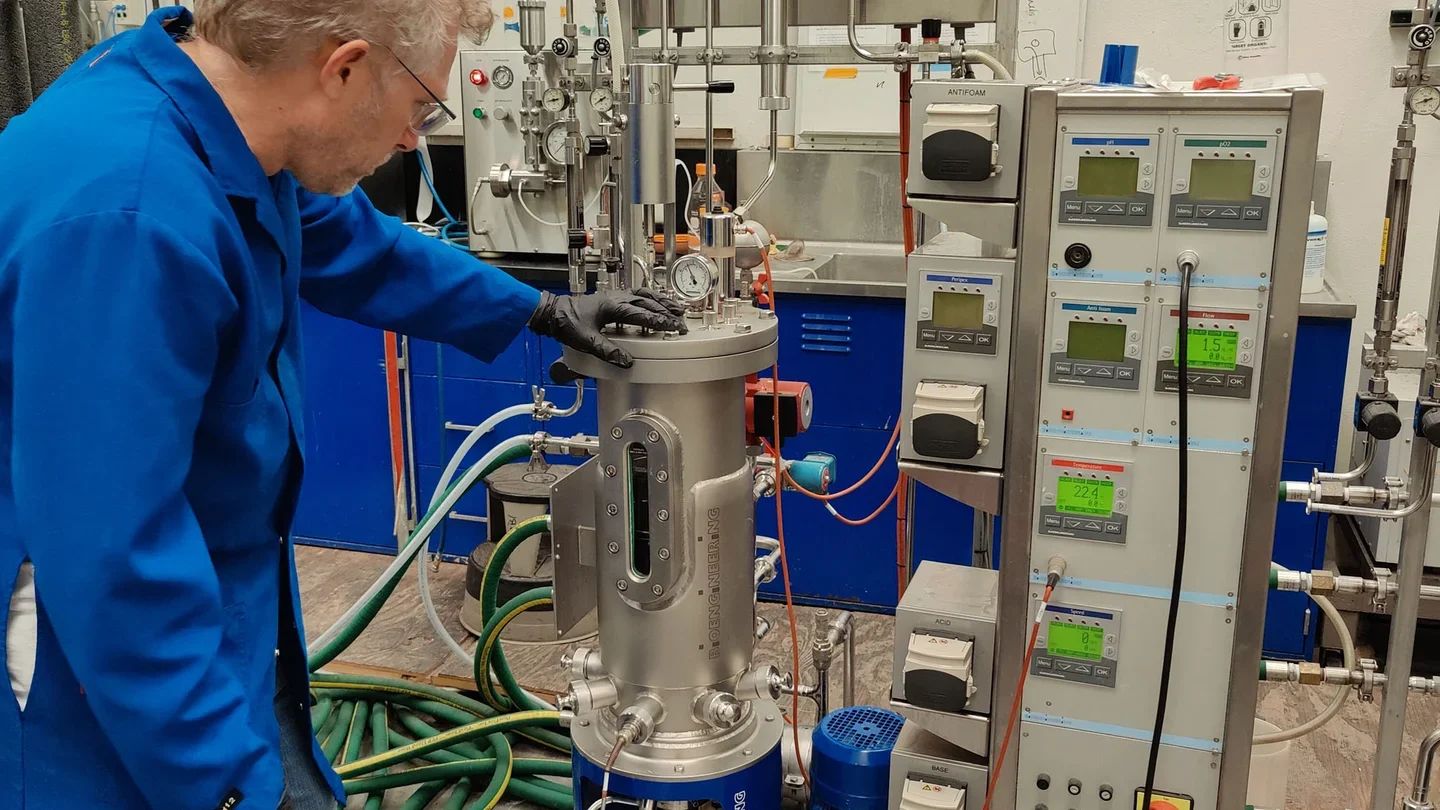
After suitable protein expression/solubility conditions have been determined this information is used to scale up cell growth to increase recombinant protein yields. The PETC is equipped with New Brunswick Innova refrigerated shaking incubators and three BioEngineering NLF22 fermentors (working volumes of ~12L.) The PETC is equipped with a sonicator, French press, and two Avestin Emulsiflex C-3 high pressure cell homogenizers. The Emulsiflex instruments are particularly well suited for efficient high-throughput cell lysis with a throughput of up to 3L of lysate per hour.
Protein Purification
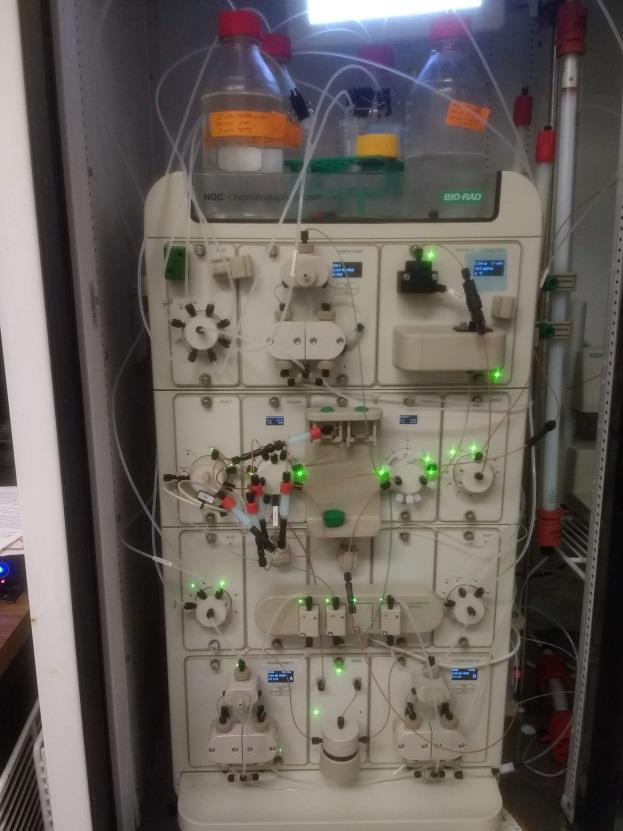
Using predetermined information on protein expression and solubility from small-scale experiments recombinant proteins are purified in large-scale using Bio-Rad NGC chromatography systems. Chromatography methods include: affinity (GST, amylose, metal chelate, heparin, dye, etc.), ion exchange (anion or cation), hydrophobic interaction (HIC), and size exclusion chromatography. If required fusion proteins and/or affinity purification tags can be proteolytically cleaved and removed at this stage.
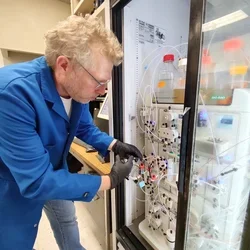
One NGC system is equipped with air sensors, sample pump, and multiple column valves allowing completely automated purification of up to seven samples by multiple chromatographic methods. This instrument is configured to allow unattended multi-step purification of samples by different chromatographic methods, e.g. affinity chromatography followed by a desalting or size exclusion chromatography step. The second NGC system has a four wavelength UV detector allowing four distinct wavelengths to be monitored at the same time allowing simultaneous detection of protein, nucleic acids, and chromophores.
Fluorescence activated cell sorting (FACS) and Yeast Display
The Bio-Rad S3 Cell Sorter is an easy to use automated cell sorter accessible to both novices and experts. The system is equipped with two lasers (488 and 561 nm) and four fluorescence detectors plus forward- and side-scatter detectors.
The PETC has constructed a yeast DARPin display library for identification of high-affinity protein binders and uses the S3 instrument for enrichment of high-affinity binders from naïve libraries. These binders can be used for structural biology applications such as crystallization chaperones and as adaptors for cryoEM imaging scaffolds; they have additional uses as tools for a variety of biochemical and cell-based assays. The PETC has produced low nanomolar affinity binders for academic labs and the biotech industry.
Crystallography
Structural studies of target proteins can be coordinated with the X-Ray and EM Structure Determination Core.
Equipment
Cell Growth
Fermentors
Bioengineering NLF22 fermentors allow prices control of multiple experimental parameters (pH, dissolved oxygen, temperature, and nutrient feed). The NLF22 fermentors are suitable for volumes up to 12L and are sterilizable-in-place.
Shaking Incubators
Large volume: The PETC has a variety of bench top (New Brunswick Innova 40 and Innova 4000) and floor shakers (New Brunswick Innova 44R and Innova 4300) including models allowing cell growth at low temperatures.
Small volume: A Shel-Lab SI6R-HS refrigerated 96-well plate shaker holds 12 96-well plates and is ideal for small-scale protein expression screening. The combination of small orbit and high rpm (up to 1000) allows the growth of 1 ml bacterial or yeast cultures to high cell densities. Well-expressed proteins can be purified in 96-well format, often with yields in the 100-200 range.
Cell Lysis
We have a Misonix sonicator, French Press, and two Avestin Emulsiflex C-3.
Protein Purification
The PETC has a Bio-Rad NGC and Bio-Rad DuoFlow chromatography systems for low to medium pressure chromatography. Both are kept at 4 degrees celsius.